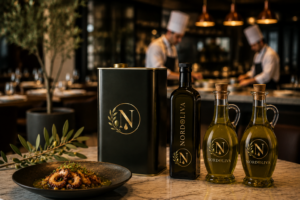
Why Michelin Star Restaurants Choose Turkish Olive Oil
In Michelin star restaurant kitchens, olive oil selection leaves nothing to chance. Europe’s leading chefs now choose Turkish olive oil not only for cost but for flavour profile, polyphenol content and supply transparency. Moreover, concrete scientific and gastronomic reasons support this preference. This article explains why Turkish olive oil has gained such value in fine dining kitchens across Europe.
The Two Roles Olive Oil Plays in Fine Dining Kitchens
Michelin star restaurant chefs use olive oil in two distinct ways. First as a cooking fat, second as a finishing oil — the final touch drizzled over a completed plate. Furthermore, these two applications require entirely different quality profiles.
A finishing oil determines the last impression of a dish. Fresh fruity aroma, balanced bitterness and a burning sensation in the throat lasting several seconds — these three characteristics define high quality. That burning sensation comes from oleocanthal. Oleocanthal is the most direct indicator of high polyphenol content. Consequently, the more intensely an oil burns, the fresher and more polyphenol-rich it is.
Michelin Star Restaurant Chefs: What They Find in Turkish Olive Oil
European top-tier kitchen interest in Turkish olive oil rests on three concrete reasons.
The first reason is exceptional polyphenol content. According to research published in the European Journal of Clinical Nutrition, Turkish extra virgin olive oils consistently exceed EU polyphenol thresholds by 30 to 60 percent. Traditional hand-harvesting and milling within two hours of harvest explain this result. In particular, Edremit’s Çelebi variety and Ayvalık’s Memecik variety stand out for polyphenol content. Edremit Çelebi delivers fresh grass and artichoke notes, while Memecik carries floral elegance and almond aromas.
The second reason is terroir diversity and single-variety production. Turkey cultivates over 80 native olive varieties — the richest varietal pool in the world. Different dishes require different oil profiles. Edremit oil suits intense, herb-heavy and spiced preparations. Ayvalık oil, however, achieves outstanding harmony with fish and seafood.
The third reason is supply transparency. Fine dining chefs know the story behind every ingredient they use. Turkish early-harvest oils arrive with harvest date, region, variety name and a full Certificate of Analysis. This transparency is absent in many industrial oils.
What Standards Does a Michelin Star Restaurant Require from Olive Oil?
Five criteria determine olive oil selection for fine dining kitchens.
Acidity must fall below 0.4 percent. The legal limit sits at 0.8 percent, but fine dining leaves that benchmark far behind. The best Turkish early-harvest oils range between 0.1 and 0.3 percent. Milling within two hours of harvest is essential because preserving polyphenol compounds requires the shortest possible time to processing. Cold-press certification is also mandatory — temperature must stay below 27 degrees Celsius. Peroxide value must fall below 12 meq O₂/kg. High peroxide values signal oxidation and damage both taste and health value. Finally, a sensory panel report prepared to IOC standards documents the oil’s true aroma profile in verifiable form.
Edremit, Ayvalık and Milas: Three Distinct Terroirs
The diversity of Turkey’s three main regions is precisely what attracts fine dining chefs. Each region addresses different gastronomic needs.
Edremit olive oil carries intense green fruit, fresh grass and pronounced artichoke notes. It pairs perfectly with meat dishes, strongly spiced sauces and bread presentations. Polyphenol content typically ranges between 300 and 500 mg/kg.
Ayvalık olive oil offers a floral and elegant profile. It carries almond aromas and a gently spiced finish. It achieves outstanding harmony with seafood, light salad dressings and white meat dishes. This is the profile European chefs most frequently request.
Milas olive oil carries a rounder and more balanced character. Ripe fruit notes come to the fore. It suits olive oil desserts, pastries and medium-bodied dishes.
The 2026 Michelin Guide and Turkish Gastronomy
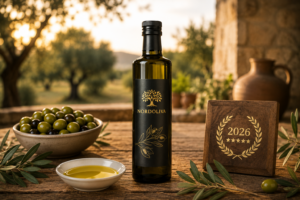
The Michelin Guide Turkey 2026 marked a turning point for Turkish gastronomy. Vino Locale in Izmir earned the distinction of Turkey’s second two-star restaurant. Chef Ozan Kumbasar’s menu brings together Aegean terroir with modern technique. The regional olive oil he uses is the most fundamental component of that terroir.
Young Chef Award winner Duru Akgül opened her Muğla restaurant inside a historic olive oil mill. She blends seasonal local ingredients with international experience. Michelin inspectors described Izmir’s starred restaurants in these terms: French technique meets Aegean sensibility — smoke, salt, olive oil and freshness on every plate.
These examples are no coincidence. Olive oil has become a foundational ingredient of Turkey’s fine dining scene. The same framework applies to Michelin-starred kitchens across Europe.
Turkey’s Position in Fine Dining Sourcing Decisions
European fine dining chefs now ask four core questions when sourcing olive oil. Does the oil carry an exact harvest date? Are region and variety clearly stated? Is a COA document available for every batch? Does the oil come directly from the producer?
Turkish olive oil answers all four questions clearly. Furthermore, during the drought years of 2022-2024, Spain’s production fell by 50 percent. As a result, many European Michelin-starred restaurants had to make urgent sourcing changes. Turkey, however, maintained its production throughout that period.
Fine Dining Quality Olive Oil Supply with Nordoliva
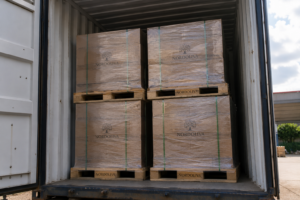
Nordoliva supplies restaurants and hotels across Europe directly from Edremit, Ayvalık and Milas with early-harvest extra virgin olive oil — no intermediaries. Every batch arrives with a full COA, a sensory panel report and a cold-press certificate. Private label production starts from 100 units.
For pricing and product information, visit our contact section — our team responds within 24 hours. To explore our product range, browse the products section.
For further reading, see our Olive Oil Wholesale Guide → Nordoliva Insights
Sources: Michelin Guide Turkey 2026 | CBI — European Olive Oil Market Report 2026 | IOC