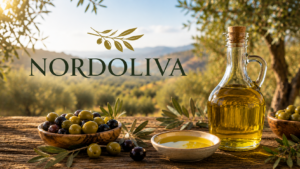
Turkish Olive Oil: Why Is It So Good? A Complete Buyer’s Guide
When people think of olive oil, Spain or Italy usually come to mind. Turkish olive oil, however, holds a 13.3% share of global production. Moreover, in the 2024/25 season, Turkey rose to become the world’s second-largest producer. Furthermore, Turkish exports to Europe grew 39% per year between 2020 and 2024, reaching 30,587 tonnes worth €184 million in 2024 alone.
This guide covers both individual consumers and wholesale buyers — distributors, restaurants, importers and food retailers. In it, we explain what makes Turkish olive oil different, which regions stand out and how to find a reliable supplier.
Turkish Olive Oil on the World Stage
Turkey normally ranks fourth globally in olive oil production, after Spain, Italy and Greece. Nevertheless, the 2024/25 season was historic: Turkey produced approximately 450,000 tonnes. As a result, it briefly ranked second in the world. In addition, Turkey exports table olives to around 117 countries. Germany, consequently, ranks among the top buyers of Turkish olive products.
Why is demand growing so fast? The answer lies in both geography and production philosophy.
Turkish Olive Oil: 3 Regions That Make the Difference
Turkey’s olive-growing regions each offer distinct climate, soil and flavour profiles. Therefore, understanding these regions is essential for any serious buyer.
Edremit — Turkey’s Tuscany
The Edremit Gulf sits at the foot of the Ida Mountains (Kaz Dağları). The Edremit olive variety grown here carries both Turkish and European geographical indication certification. Furthermore, it is known for intense fruity aroma, balanced bitterness and high polyphenol content. Early-harvest olives are brought to the press within four hours of picking. Consequently, the acid level frequently falls below 0.2%. Oils from this region have, moreover, won gold medals at major international competitions repeatedly.
Ayvalık — The Heart of North Aegean Olive Oil
Ayvalık is the best-known olive oil centre on the North Aegean coast. The region has cultivated olives since the 4th century BC. Its Mediterranean microclimate produces olives with high oil content and a distinctive aroma. In addition, large producers here operate over 350,000 olive trees and hold full IOC-compliant certifications.
Milas — High Polyphenol Profile
Milas, in Muğla province, holds a significant share of Turkey’s 200 million olive trees. Oils from this region are particularly notable for polyphenol content. In fact, boutique producers regularly achieve 640+ mg/kg polyphenol values. For health-focused buyers, therefore, these numbers matter enormously.
Turkish Olive Oil vs Spanish and Italian: The Real Difference
This question comes up constantly. So let us answer it directly.
Spanish olive oil accounts for 38% of world production. This volume, however, comes largely from industrial-scale farming. Varieties such as Picual, Arbequina and Hojiblanca dominate. Prices are competitive. Single-origin boutique production, on the other hand, remains limited.
Italian olive oil carries a powerful brand image. The commercial reality, however, is that Italy consumes far more than it produces. As a result, much of what is bottled in Italy is bulk oil purchased from Spain, Greece or Turkey.
Turkish olive oil stands out precisely here. Single-region sourcing, transparent traceability and competitive pricing come together. Furthermore, Turkey has a clear climate advantage. The Mediterranean droughts of 2022-2024, for example, caused Spanish and Italian prices to surge 78%. Turkey, by contrast, maintained its production throughout those years. Consequently, the 2024/25 season delivered a record-breaking harvest.
Certifications and Quality Standards for Turkish Olive Oil
Turkish olive oil destined for export must comply with EU standards and IOC criteria. Therefore, the following documents should be standard for any serious exporter.
These include IOC compliance certification, acidity analysis below 0.8%, peroxide value analysis below 12 meq O₂/kg, UV spectrophotometric analysis for adulteration detection, an organoleptic panel report and EU organic certification where applicable.
In addition, Turkish olive oils have been winning awards consistently at BIOFACH, NYIOOC and the Berlin Global Olive Oil Awards. These results, consequently, provide independent quality validation. They are, moreover, a reliable signal for buyers evaluating new suppliers. For more on international quality standards, visit the International Olive Council (IOC).
What to Look for When Buying Turkish Olive Oil
Whether you are buying for personal use or wholesale supply, the following criteria separate genuine quality from marketing claims.
First, look for a single-region declaration. Producers who say “from Edremit” or “from Ayvalık” are preferable to those who say only “from Turkey.” Second, check harvest date transparency. Every bottle or delivery document should clearly state the harvest year. Third, request access to analysis reports. Acidity, polyphenol and UV results should be shareable on request. Fourth, look for a cold press certification guaranteeing processing below 27°C. Finally, favour own-grove producers. A farm-to-bottle model gives the highest level of traceability.
Wholesale Buying: What to Expect at Different Volumes
Two main models dominate Turkish olive oil exports. Each suits a different type of buyer.
The first is bulk purchasing. For volumes between 20 and 200 tonnes, buyers receive oil in tankers or IBC containers. This model suits importers and supermarket chains who wish to bottle under their own label. It also offers maximum pricing flexibility.
The second is bottled supply, including private label. For orders of 100 units and above, custom bottle design, label and packaging are available. Consequently, restaurant chains, food retailers and corporate gift buyers favour this model. Delivery timelines typically run one to two weeks, depending on customisation requirements.
Why Turkish Olive Oil — and Why Now?
A significant market window has opened. Spain and Italy raised prices by 78% during the 2022-2024 drought. As a result, German and Dutch distributors began searching for alternative suppliers. Turkey, however, delivered a record harvest in 2024/25 — at exactly the right moment.
The pricing data confirms the opportunity. Germany currently pays an average of $7,990 per tonne for imported premium olive oil. This places it fifth globally for import price levels. That margin is, therefore, very attractive for Turkish producers who meet quality and certification requirements.
On the regulatory side, Turkish olive oil reaches Europe under Pan-Euro-Mediterranean (PEM) preferential rules of origin. Exporters use EUR.1 or EUR-MED certificates. Consequently, most Turkish olive oil arrives in European markets with reduced or zero duty under these arrangements.
Sourcing Turkish Olive Oil with Nordoliva
Nordoliva connects buyers with extra virgin olive oils sourced from Turkey’s most productive olive-growing regions. Every bottle, moreover, clearly states the harvest date, acid level and cold press production certificate.
For individual orders, visit our product page. For wholesale purchasing, distributor partnerships and private label enquiries, fill out our contact form — our team responds within 24 hours.
For your next step, read our article “What Is Extra Virgin Olive Oil? A Label Reading Guide” → Nordoliva Blog